
Questions to Ask at Your Child's Parent-Teacher Conference
47 Questions Organized by Topic and Grade Level
Last Updated September 25, 2026
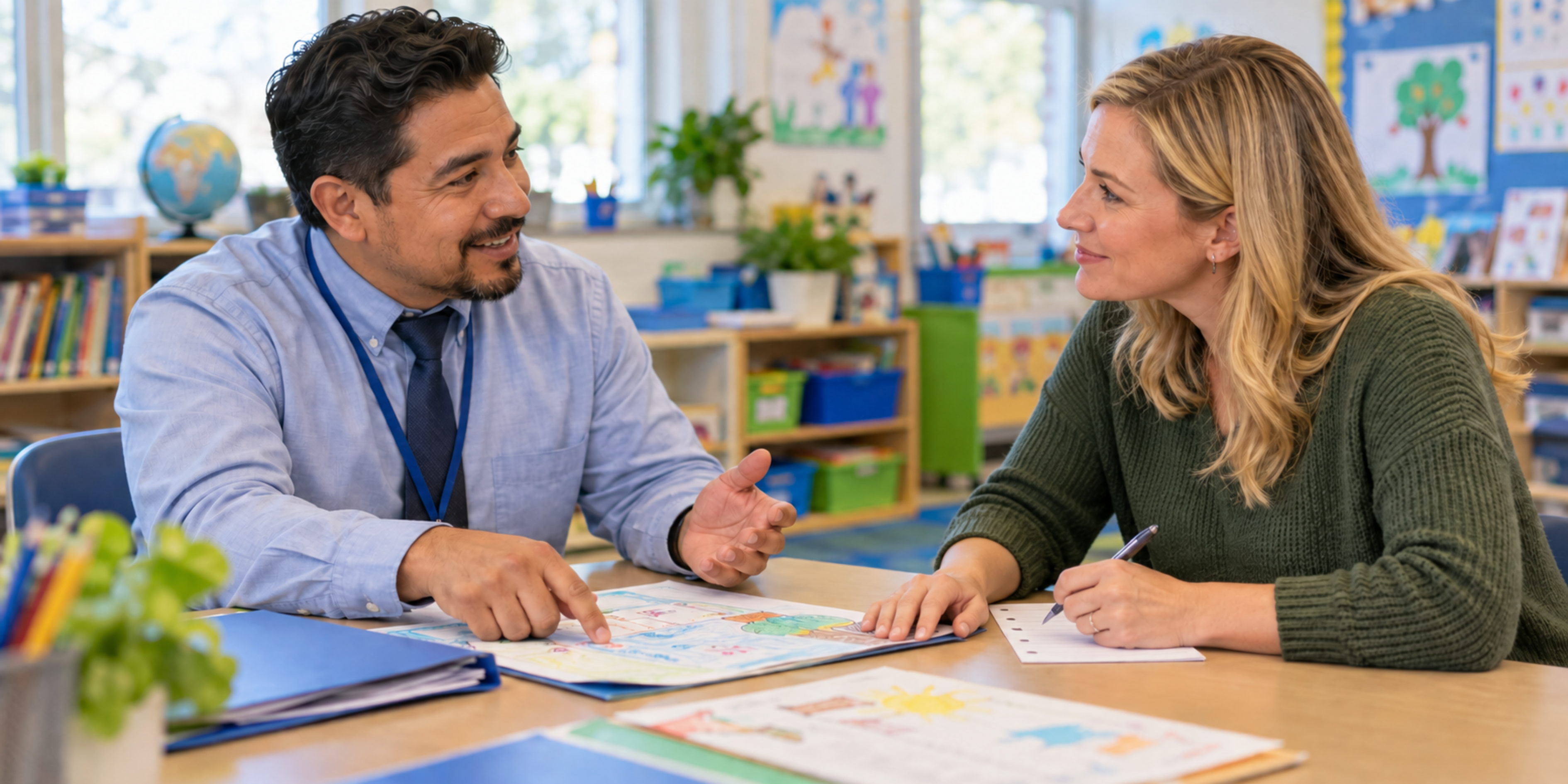
Parent-teacher conferences go by fast! You may have just 15 or 20 minutes to look through work samples, hear the teacher's perspective, and talk about what's on your mind. That's a lot to fit into one little meeting.
Wondering what questions to ask at a parent-teacher conference? Pick the three things you most want to understand about your child's learning, friendships, or classroom experience. Bring your questions, ask for specific examples, and leave with one clear next step you can take at home. Use the parent-teacher conference questions below to find the ones that matter most to your family.
Before You Go: Pick Your Top Three
The questions to ask at a parent-teacher conference depend less on your child's grade than on what's actually worrying you. You won't get through all forty-seven, so choose the three that matter most this year and treat everything else as a bonus if time allows.
A quick way to narrow it down: finish these sentences before the meeting.
- The thing I most want to understand is...
- The thing I'm most worried about is...
- The thing I want to help with at home is...
Write your three questions on a notecard or your phone, and bring a pen. Teachers notice when a parent takes notes, and it makes follow-up far easier a month later.
Questions About Academic Progress
Start here, because the answers shape everything else.
1. Where is my child performing compared to grade-level expectations?
2. What does that look like in practice, not just as a letter or a number?
3. Which subject is strongest right now and why?
4. Which subject is hardest and what specifically makes it hard?
5. Can you show me a piece of work that represents where my child is?
6. Has anything changed since the start of the year, up or down?
7. Is my child being challenged enough?
8. Are there skills from last year that still need shoring up?
If a teacher gives you a general answer, it's fine to ask for a concrete example. "Can you show me what that looks like in her writing?" is a friendly and extremely useful follow-up.
Questions About Behavior, Focus and Social Life
Academics are only part of the picture, and teachers often have information here that never shows up on a report card.
9. How does my child do with transitions and following directions?
10. Does my child ask for help when stuck?
11. Who does my child spend time with?
12. How does my child handle frustration or a mistake?
13. Is my child participating in class discussions?
14. Are there any friendship or social dynamics I should know about?
15. How is my child during unstructured time like recess or lunch?
16. Have you noticed changes in mood, energy or attention?
Questions About Homework and Study Habits
17. How much time should homework take at this grade level?
18. Is my child turning work in on time and complete?
19. What does good homework support from a parent look like, and where should I step back?
20. Are there apps, logins or platforms I should be checking?
21. What should I do when my child is stuck and I don't know the material either?
Questions About What You Can Do at Home
This is the question set parents most often skip, and it's one of the most useful.
22. What's the single most useful thing I could do at home this quarter?
23. What should we read, practice or play to support what you're teaching?
24. How much reading at home do you recommend, and does audiobook time count?
25. Is there anything I'm currently doing that I should stop?
26. How can I help without turning every evening into a battle?
Questions About Support, Testing and Resources
27. Does my child qualify for any additional support, enrichment or intervention?
28. What assessments are coming up and what do they actually measure?
29. If I have concerns about a learning difference, what's the process for evaluation?
30. Are there tutoring, club or after-school options connected to this?
31. Who else works with my child during the week?
Questions About Communication Going Forward
32. What's the best way to reach you and what response time should I expect?
33. Would you let me know if something shifts before the next report card?
34. Should we plan a follow-up check-in, and when?
35. Is there a portal or system where I can see grades and assignments myself?
Questions to Ask at a Kindergarten Parent-Teacher Conference
Kindergarten conferences are less about grades and more about whether your child is settling into school as a place. The questions look different.
36. Is my child comfortable and happy in the classroom?
37. How is my child doing with routines like lining up, cleaning up and taking turns?
38. Where is my child with letter recognition, letter sounds and early number sense?
39. Can my child separate at drop-off without distress?
40. Does my child play with others or mostly alongside them?
41. How are fine motor skills like scissors, pencil grip and buttons?
42. Is my child able to communicate needs to an adult?
43. What's normal for this age that I might be worrying about unnecessarily?
That last one is worth asking out loud. Kindergarten teachers see a very wide range of normal every year, and the reassurance is often the most valuable thing you take home.
For a full walkthrough of the first conference, see our kindergarten parent-teacher conference guide.
Questions for a Middle or High School Conference
Older students bring a different set of concerns, and conferences are usually shorter.
44. Is my teen advocating for themselves when they need help?
45. How are organization and deadline management?
46. Is my teen on track for the courses or credits they want next year?
47. What would you want my teen to hear from me tonight?
What to Avoid Asking
A few questions reliably burn your limited time without giving you much back.
- Comparisons to other students. Teachers can't discuss other children, and the answer won't help yours.
- Yes or no questions. "Is everything okay?" invites "yes" and ends the conversation. Ask "what would you like to see change this quarter?" instead.
- Anything that needs an hour. If you have a serious concern about a learning difference or a conflict, say so early and ask to schedule a longer separate meeting.
After the Conference
Before you leave the parking lot, write down the one action item you agreed on. Then do two things this week: tell your child one specific positive thing the teacher said, and start the one habit you committed to. A conference that changes nothing at home was just a nice chat.
Our parent-teacher conference checklist for parents walks through preparation and follow-up in more detail.
For Teachers and Room Parents Organizing Conferences
If you're the one scheduling these meetings, you don't have to run it off a clipboard, though our free SignUp sheet template is there if you want one on paper. SignUp's free parent-teacher conference scheduler builds your time slots (aka Spots), lets families book without creating an account and sends automatic email and text reminders so fewer Spots go empty. Setting one up takes about as long as reading this article.
More ideas in the Parent-Teacher Conference Planning Center and our free SignUp sheets.
About the Author

Tara McAdams
Digital Marketing Manager, Content Strategist & Creator
Tara leads content strategy at SignUp and creates a variety of resources on a wide range of topics – including lifestyle trends, parent tips, prep for holidays, volunteer management, and event planning. More about Tara →


